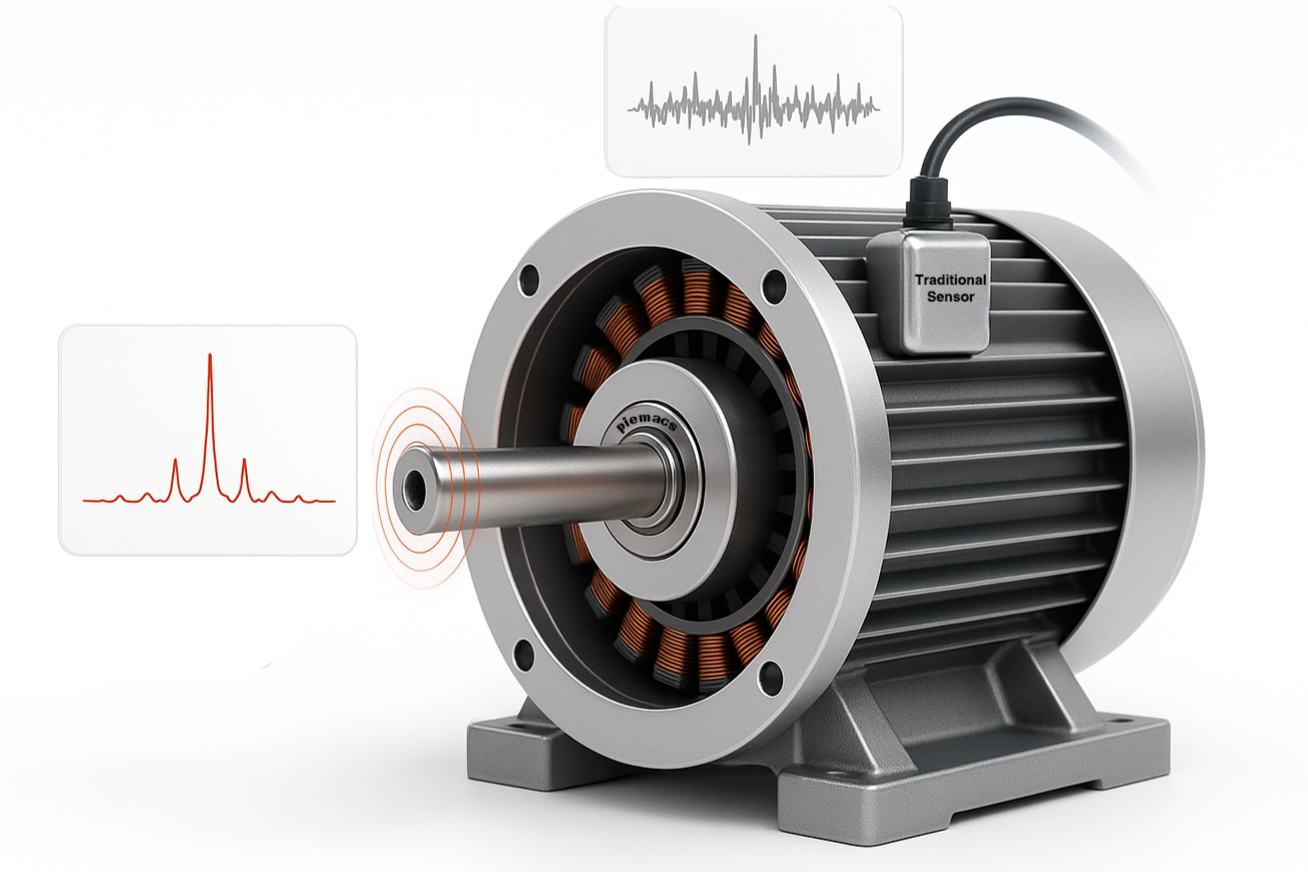
From Vibration Guesswork to Structural Insight
Surface Vibration ≠ Machine Health
Most condition-monitoring systems rely on accelerometers mounted on the outside of machines.
But surface vibration is fundamentally limited — it is:
Contaminated by environmental and structural noise
Filtered and damped by the machine housing
Delayed in revealing early mechanical damage
Influenced by mounting torque and external forces
Unable to sense internal load paths or stiffness changes
Installed Where Forces Flow
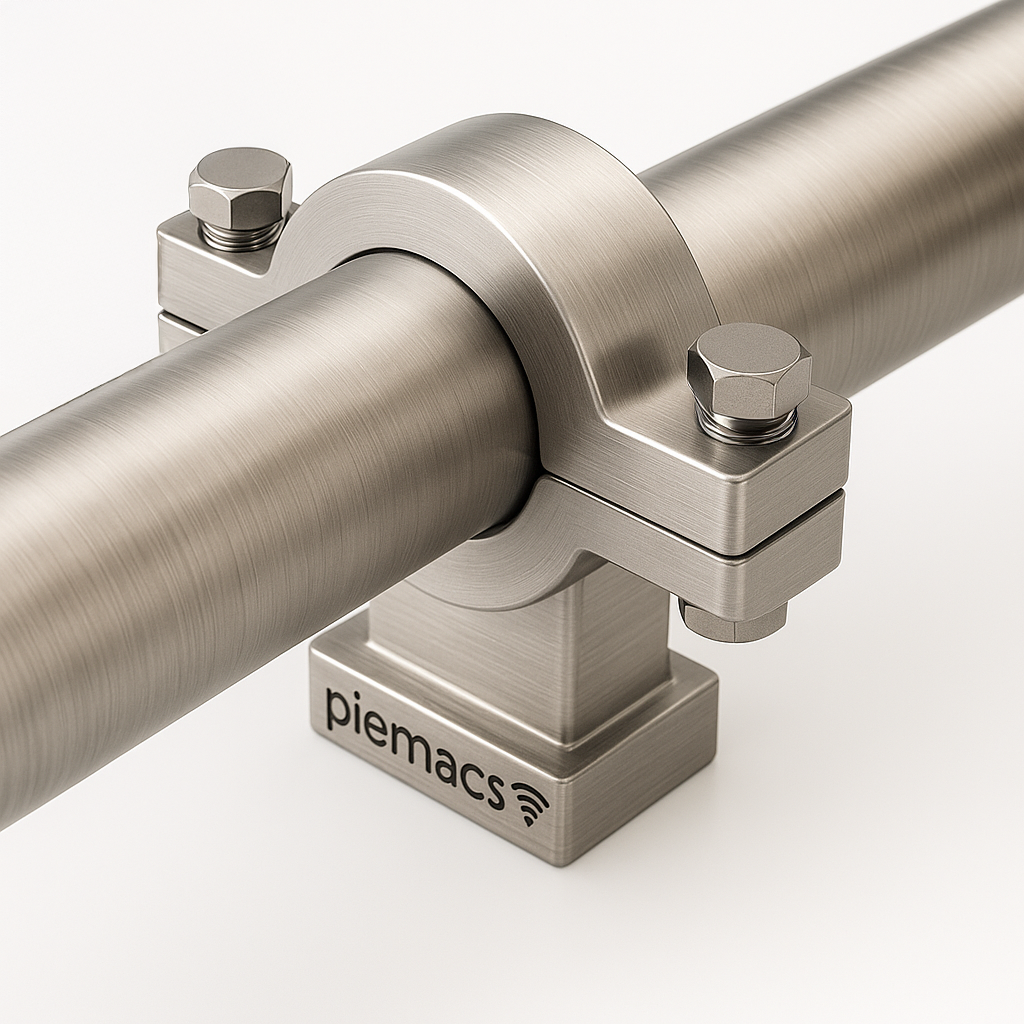
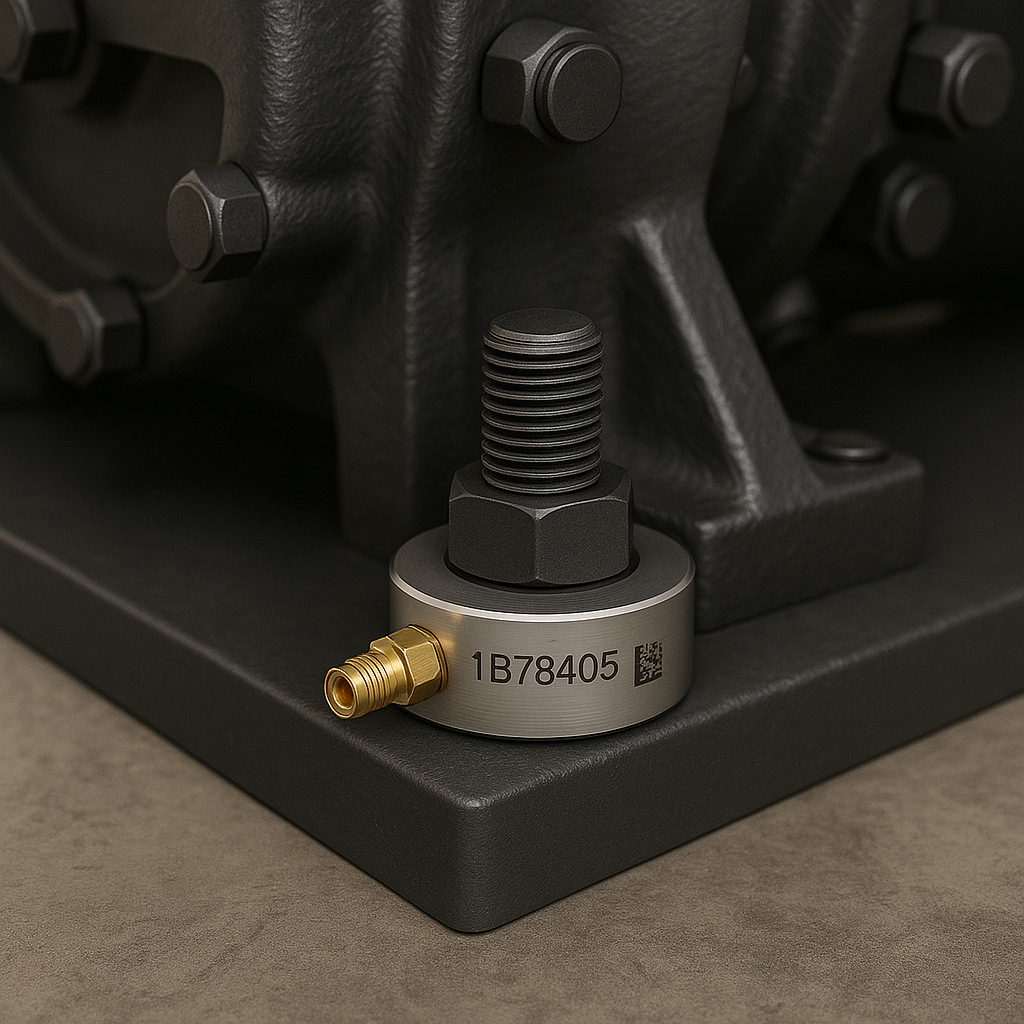
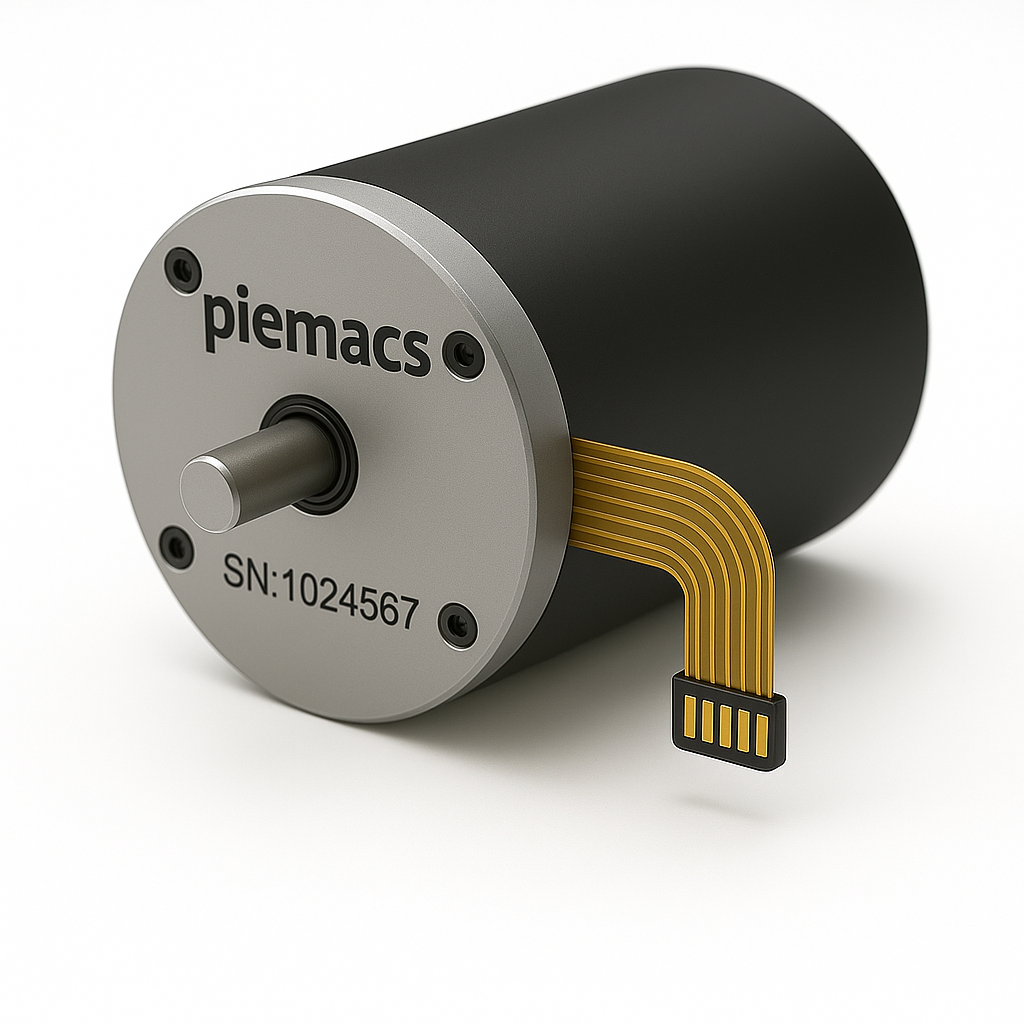
Piemacs sensors mount inside joints, interfaces, flanges, bolts, clamps, and housings — the actual load paths of the machine. Here, the sensor directly measures:
Internal strain energy
Micro-slip between components stiffness changes
Torque and load variations
Early indications of mechanical loosening structural
Resonance patterns
The Advantages of Measuring Structural Strain
Detects failures at their origin — bearing outer-race spalls, preload loss, shaft imbalance, gear mesh anomalies
Noise-immune — only sees internal structural energy, not environmental vibration
Insensitive to mount torque & alignment
Extremely broadband — from mHz structural drift to >20 kHz high-frequency events
No resonance peaks due to zero-mass architecture
Captures stiffness degradation long before vibration amplitude changes
Stable, repeatable baselines ideal for AI/ML models